
Leaving your dog alone: Here's how to do it without stress
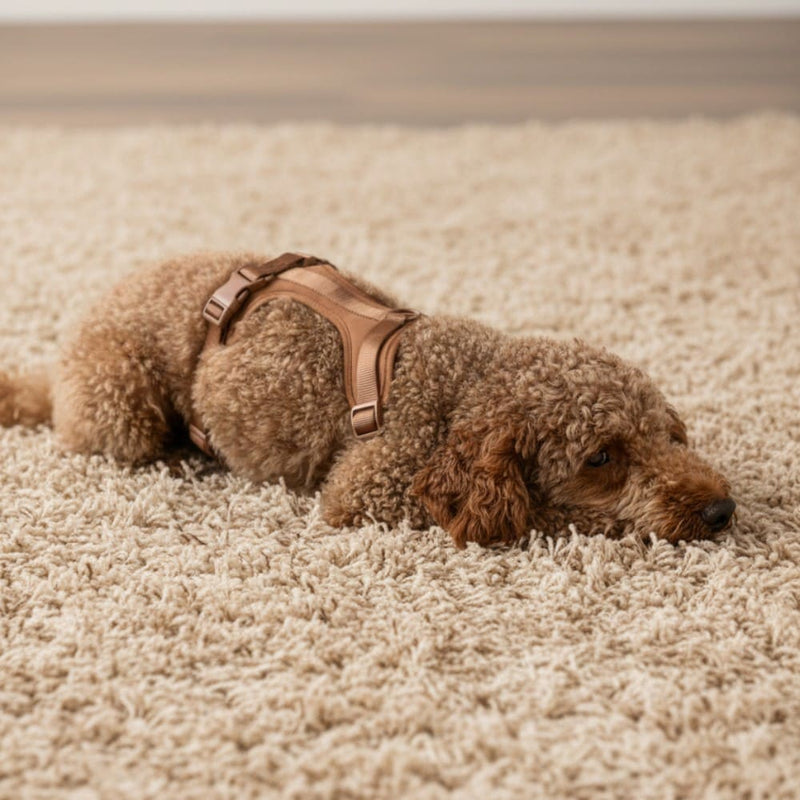
Dogs are pack animals – being left alone is not in their nature. Nevertheless, it's part of everyday life: shopping, doctor's appointments, work. Your dog needs to learn that you'll come back and that being alone isn't a threat.
The good news: With the right training, almost any dog can learn to stay calmly alone. This guide will show you how, step by step.
The most important points in brief
- Adult dogs: Leave alone for a maximum of 4-6 hours, not daily.
- Puppies: Significantly shorter sessions, gradually increasing (rule of thumb: age in months = max. hours)
- Training: Always in small steps, never throw in at the deep end
- Important: No elaborate farewell or welcome ritual.
- If problems arise: Seek professional help before separation anxiety becomes entrenched.
How long can a dog be left alone?
There's no one-size-fits-all answer – it depends on your dog's age, training, and temperament. The following are some guidelines:
- Puppies (up to 4 months): Maximum 1-2 hours
- Puppies (4-12 months): Maximum 3-4 hours
- Adult dogs: Maximum 4-6 hours
Important: These are upper limits, not recommendations for everyday life. If your dog is alone for 8 hours a day while you're at work, that's too much – even if he seems to "put up with it." In this case, you need a solution: a dog sitter, dog walker, doggy daycare, or a family member who can check in from time to time.
Why dogs don't like being left alone
Dogs are pack animals by nature. In the wild, being alone means danger – separated from the pack, a dog is defenseless. Even if your dog knows he is safe indoors, this instinct remains.
Furthermore, you are his pack. When you leave, his pack "disappears"—and he doesn't know if or when you'll return. This causes stress. That's precisely why training is so important: your dog needs to learn that your leaving is normal and that you always come back.
The training: step by step
Step 1: Spatial separation within the apartment
Before you leave the house, practice leaving your dog in another room. Just go into the bathroom, close the door, and come back after a few seconds. Don't make a big deal out of it – just make it part of your daily routine.
Increase the time gradually: Leave the door closed for longer periods, go into different rooms. Your dog should learn: Closed doors are normal, and you always come back.
Step 2: Defuse key stimuli
Dogs are masters at recognizing patterns. Put on your jacket, grab your keys, put on your shoes – your dog knows immediately: Now he's leaving. And the stress begins even before you're gone.
The solution: Decoupling these triggers. Put on your jacket for a while and sit on the sofa. Pick up your keys and put them away again. This way, your dog learns that a jacket doesn't automatically mean being alone.
Step 3: Briefly leave the apartment
If physical distancing works, actually leave the apartment – but only for a few seconds. Close the door, wait a moment, open the door again. No goodbye, no big greeting. Everything completely normal.
Increase the time gradually: 30 seconds, 1 minute, 5 minutes, 10 minutes. Important: Don't increase linearly! Sometimes 5 minutes, then only 2, then 8. This teaches your dog that he never knows how long you'll be gone – and that it's not worth "waiting it out" for that long.
Step 4: Extended absence
If 15-20 minutes goes smoothly, you can extend the time. Go shopping briefly, take a short walk. Observe (e.g., with a camera) how your dog behaves.
Golden rule: During the training phase, you should never leave your dog truly alone – meaning for longer than he can currently tolerate. A single traumatic experience can set the training back by weeks. If in doubt, arrange for a dog sitter.
Tips for relaxing alone time
Utilize the capacity beforehand
A tired dog is a relaxed dog. Before you leave: take your dog for a long walk, playtime, and do some mental stimulation. This way, your dog will have less energy for stress and ideally sleep while you're gone.
No big farewell drama
One of the most common mistakes: saying a long goodbye, petting, saying "I'll be back soon, sweetheart!" – this signals to your dog that something special (and potentially threatening) is happening. Better: Just leave. Normally, without any fuss.
A calm greeting
The same applies when you come home: Don't greet people enthusiastically right away. Take off your jacket first, put down your bag, then calmly say "hello". This way, your return becomes something normal – not the highlight of the day.
Offer employment
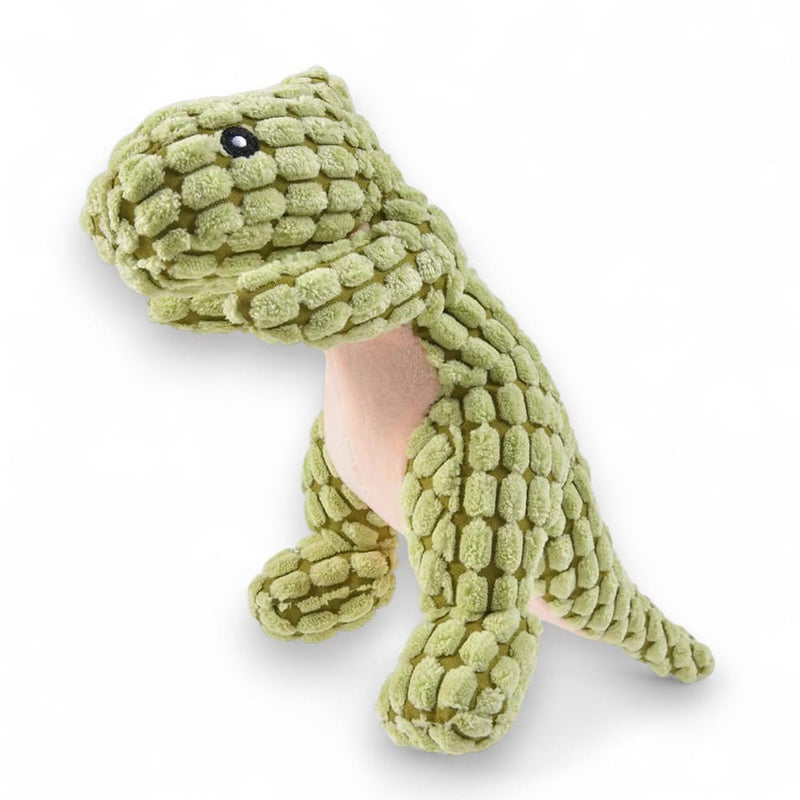
Give your dog something to do while you're gone. This bridges the initial critical phase after leaving and associates your absence with something positive.
Suitable are:
- Stuffed Kongs (e.g. with liverwurst, frozen keeps longer)
- Chewing bones or chewing roots
- Robust toys like our TUGGA Dino – perfect for chewing and cuddling.
- Snuffle mats with hidden treats
Important: Only give toys that your dog can have unsupervised – no small parts that he could swallow.
Choose the right place
Your dog should stay where he feels comfortable – his bed, his blanket. This spot shouldn't be right by the front door, where he can hear every noise in the stairwell. A quiet place in the apartment is better.
Use camera
A pet camera helps you see how your dog behaves when you're away. This way you can see: Is he sleeping peacefully? Is he pacing restlessly? Is he barking? This helps you adjust your training.
Signs of separation stress
Not every dog shows obvious signs of stress. Look out for these warning signs:
- Barking, howling, whining after you leave
- Destruction of furniture, doors, objects
- Inappropriate elimination despite the dog being house-trained
- Excessive salivation or panting
- Self-harm (e.g., licking paws raw)
- Apathy or refusal to eat after your return
If your dog shows these signs, the training has gone too fast or he needs professional support.
Special cases
Leaving puppies alone
You can start training as early as puppyhood – but the periods of time must be very short. A 3-month-old puppy should not be left alone for more than 1-2 hours. Important: Puppies cannot yet hold their bladder for long. Being alone for too long leads to accidents – and frustration for both of you.
Dogs from animal shelters
Dogs from shelters or international rescue organizations have often had bad experiences. Assume they will need to relearn how to be alone – even if they are already adults. This requires a great deal of patience.
Sudden separation anxiety in older dogs
If a dog that has always been fine being alone suddenly shows signs of stress, this could indicate a health problem. A veterinary check-up is then advisable.
Frequently Asked Questions
Can I leave my dog alone for 8 hours?
Not recommended. This is too long for most dogs and can lead to stress, boredom, and behavioral problems. If you work full-time, you need an interim solution: a dog sitter, dog walker, doggy daycare, or someone who can stop by at lunchtime.
My dog destroys things when he's alone. What should I do?
This is a sign of stress – your dog isn't "getting revenge"! Reduce training sessions, shorten the duration, and provide more stimulation. If the destructive behavior is severe: seek professional help.
Should I punish my dog if he has trashed the apartment?
No, never. Your dog doesn't understand what he's being punished for – the behavior happened hours ago. Punishment only makes things worse. The dog acted out of stress, not malice.
Does a second dog help with separation anxiety?
Not necessarily. A dog with separation anxiety is afraid of being separated from YOU – not of being alone itself. A second dog rarely solves the problem and can even worsen it if the anxiety is "contagious".
At what age can I leave my puppy alone?
You can begin training after the settling-in period (approx. 1-2 weeks). However, start with small steps and very short periods of time. A puppy should never be left alone longer than it can hold its bladder during the first few months.
Conclusion
Leaving a dog alone takes training – no dog is naturally good at it. With patience, small steps, and the right strategies, almost every dog can learn to stay calmly at home. Most importantly: don't rush things, avoid creating negative experiences, and seek professional help if in doubt.
For relaxing times – together and alone
Whether on a walk together or cuddling at home alone: with the right accessories, your dog will feel comfortable. Our TUGGA Dino is perfect for chewing and cuddling – ideal for when you're not around.
To the toy →