
Dog Harness Test 2026: The best Y-harnesses compared
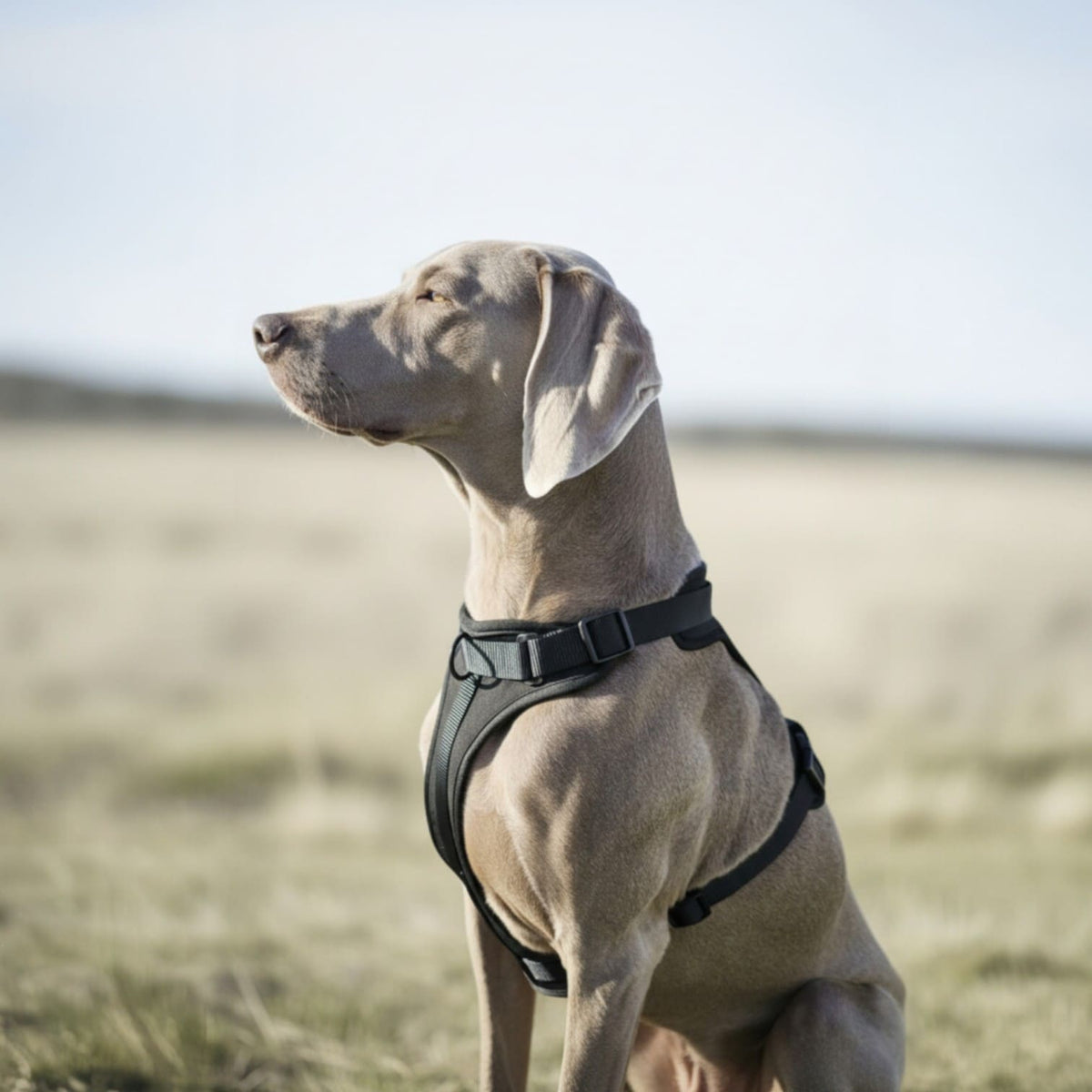
Are you looking for the best dog harness for your four-legged friend? Then you've come to the right place. In our comprehensive dog harness test 2026, we examined the most popular models – with a special focus on ergonomic Y-harnesses , which are recommended by veterinarians and dog trainers.
Whether you have a lively puppy, a strong Labrador or a dainty French Bulldog: choosing the right harness affects not only the comfort but also the health of your dog.
Go directly to the harnesses →This guide tells you everything you need to know: what types of harnesses are available, what to look for when buying one, and how to find the perfect size for your dog.
The most important points in brief
- Y-harnesses are the most ergonomically sound choice – they leave the shoulder blades free and distribute pressure optimally.
- A good dog harness protects the larynx and cervical spine compared to a classic collar .
- The right size is crucial: Measure your chest and neck circumference before buying.
- For large dogs we recommend sturdy harnesses with a handle, for small dogs light, padded models.
- Quality pays off: High-quality materials such as neoprene and tear-resistant nylon last for years.
Dog harness or collar – which is better?
Many dog owners ask themselves this question. The short answer: For most dogs, a harness is the better choice.
The reason lies in the pressure distribution. When your dog pulls on the leash – and let's be honest, which dog doesn't do that occasionally – with a collar , all the pressure is concentrated on the sensitive neck area. This puts strain on the larynx, trachea, and cervical spine.
A well-fitting dog harness, on the other hand, distributes the pulling force across the chest and back. This is not only more comfortable for your dog, but also significantly healthier – especially for:
- Puppies and young dogs whose bodies are still growing
- Dogs with respiratory problems (Pug, French Bulldog, Boxer)
- Dogs that pull strongly
- Anxious or reactive dogs that might wriggle out of a collar
- Active dogs who do a lot of hiking, jogging or dog sports
What types of dog harnesses are there?
Not all harnesses are the same. Depending on the design, comfort, freedom of movement, and intended use vary considerably. Here's an overview of the most important types:
Y-harness (Y-chest harness) – Our test winner
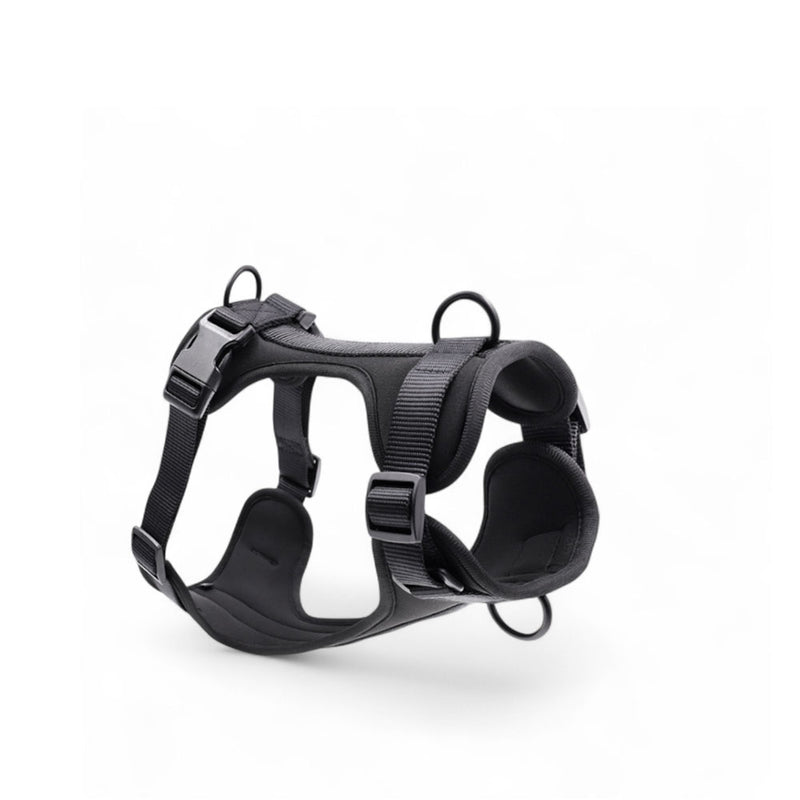
The Y-harness is a favorite among dog trainers and veterinarians for good reason. The namesake Y-shaped chest strap runs between the front legs, leaving the shoulder blades completely free . This means maximum freedom of movement for your dog.
Advantages of the Y-harness:
- Optimal pressure distribution on the sternum
- Shoulder blades remain free – no restriction of movement
- No pressure on the larynx or cervical spine
- Escape-proof due to its design
- Ideal for active dogs, hiking and dog sports
Suitable for: All dog breeds and sizes, especially recommended for active dogs and dogs that tend to pull.
Norwegian harnesses – The popular classic
You can recognize a Norwegian harness by the horizontal chest strap that runs across the chest. It's particularly easy to put on – simply slip it over the head and fasten the belly strap.
Advantages: Quick to put on and take off, good pressure relief in the neck area.
Disadvantages: The horizontal chest strap can restrict shoulder movement in some dogs. Therefore, it is less suitable for very active dogs or dog sports than a Y-harness.
Leading harness (H-harness)
The classic harness consists of two loops (neck and chest) connected by a bar. It offers many adjustment options and adapts well to different body shapes.
Suitable for: Growing dogs, as it grows with them, and for everyday walks.
Safety harness (panic harness)
Safety harnesses have an additional belly strap that prevents anxious dogs from wriggling out of the harness. Perfect for rescue dogs, very shy dogs, or dogs in the adjustment period.
Measuring your dog harness size – How to find the perfect fit
No matter how high-quality a harness is, if it doesn't fit properly, it's useless. Too tight means chafing and discomfort, too loose is a safety risk. Here's how to measure correctly:
Step-by-step: How to measure your dog correctly
- To measure chest circumference: Place the measuring tape at the widest point of the ribcage – this is about a hand's width behind the front legs. This is the most important measurement.
- Measure neck circumference: Measure where the upper part of the harness will later sit – usually a little lower than with a collar.
- Measure back length: From the withers (highest point of the shoulder blades) to the base of the tail – important for harnesses with a back plate.
- Note your weight: This will serve as an additional guide if you fall between two sizes.
📏 Unsure about the size?
In our detailed instructions, we show you exactly how to measure your dog correctly – including a size chart for all our products.
For measuring instructions & size chart →Tip: It's best to measure when your dog is standing relaxed. Two fingers should fit between the harness and the body – this guarantees freedom of movement without slipping.
Important: If your measurement falls between two sizes, choose the larger size – a harness that is too tight is much more uncomfortable than one that is adjusted slightly looser.
The right dog harness for every size
Dog harness for large dogs
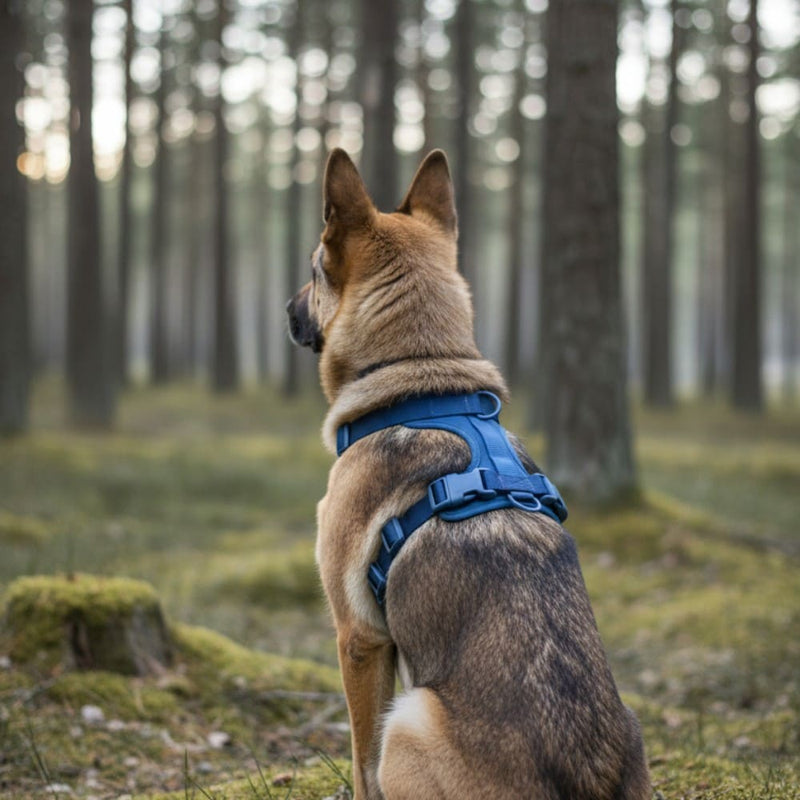
Large dog breeds such as Labradors, Golden Retrievers, German Shepherds, or Rottweilers need a particularly robust harness. Sturdy materials, wide straps, and secure closures are essential.
Things you should pay attention to:
- Tear-resistant nylon or durable webbing
- Wide padding for optimal pressure distribution
- Handle on the back for more control
- Multiple D-rings as tethering points
- Reflective elements for safety in the dark
Dog harness for small dogs

For small breeds like Chihuahuas, Dachshunds, Jack Russells, or Maltese, lightness is key. The harness shouldn't be too heavy or bulky so that your little four-legged friend isn't restricted.
This is what matters:
- Lightweight material that doesn't add bulk
- Soft padding to protect sensitive skin
- Narrow straps that don't chafe under the armpits
- Easy to put on – small dogs are often impatient.
Both the SELKA (from XS) and the STYRA (from S) are available for small dogs.
Discover harnesses in all sizes →Dog harness for puppies
Puppies grow quickly – sometimes seemingly overnight. That's why an adjustable harness with a wide size range is the best choice. This way, you can use the harness through several growth phases.
Our tip: A harness is preferable to a collar, especially for puppies. Young dogs often pull strongly on the leash, and their cervical spine is particularly sensitive.
How to properly put on a dog harness – step by step
Putting on a harness isn't rocket science – if you know how. Here are the instructions for a Y-harness:
- To open the harness: Open all the buckles and spread the harness out in front of you so that you can see the Y-shape.
- Guide over the head: Carefully guide the head opening over your dog's head.
- Threading in the front legs: Depending on the model, guide the legs through the corresponding openings or close them at the sides.
- Close the buckles: Fasten the buckles on your chest and/or stomach.
- Check the fit: Two fingers should fit flat between the harness and the body. No more, no less.
- Movement test: Let your dog take a few steps and check if anything slips or rubs.
Important: The harness fits correctly when the shoulder blades are free to move, no strap rubs in the armpit, and the chest strap lies in the middle of the sternum.
Buying a dog harness – what you should pay attention to
With so many offers available, it's easy to lose track. These criteria will help you decide:
Material and workmanship
High-quality materials make the difference between a dish that lasts for years and one that needs to be replaced after a few months.
- Nylon: Robust, lightweight, quick-drying – the all-rounder
- Neoprene: Soft, padded, ideal for sensitive dogs
- Mesh/air fabric: Breathable, perfect for summer
- Reflectors: They greatly increase visibility in the dark.
adjustability
The more adjustment points a harness has, the better you can adapt it to your dog's body shape. Look for buckles on the chest and belly – ideally, these should be infinitely adjustable.
Leash points (D-rings)
Most harnesses have a D-ring on the back. Models with an additional chest ring are better.
- Back D-ring: Standard for relaxed walks
- Chest D-ring: Helps with dogs that pull – the dog is gently guided to the side instead of being slowed down.
Our recommendation: Ergonomic Y-harnesses for every need
After intensive research and practical tests, we can particularly recommend two Y-harnesses that meet all the important criteria:
SELKA – The sporty Y-harness
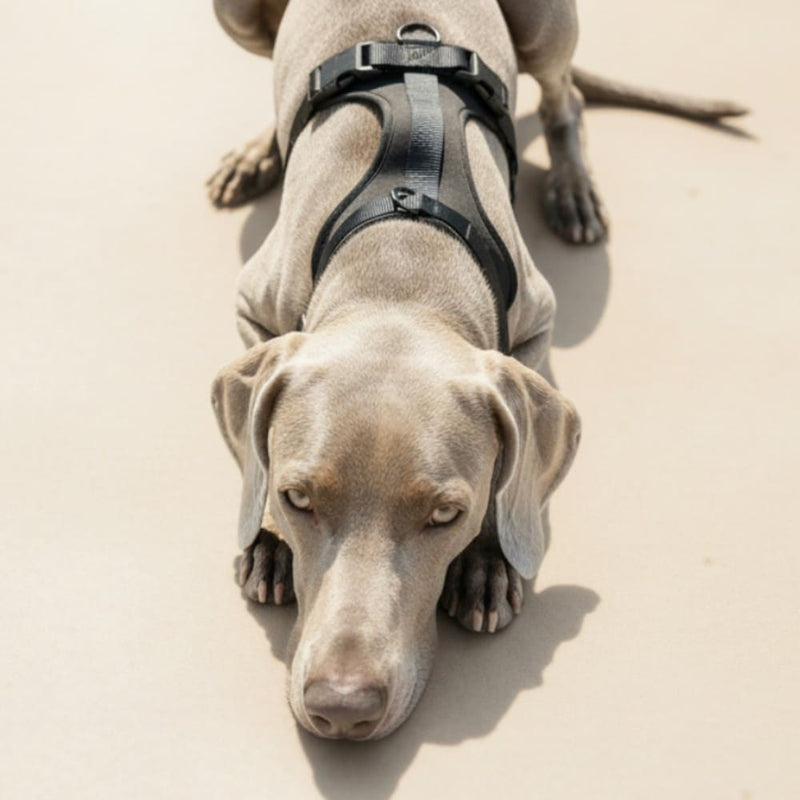
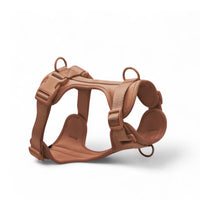
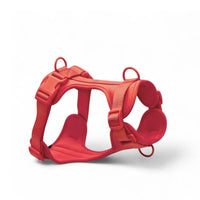
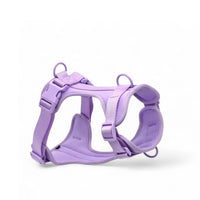
The SELKA dog harness is our favorite for active dogs and outdoor enthusiasts. The neoprene padding ensures maximum comfort, while the robust nylon webbing can withstand even the strongest dogs.
Highlights:
- Ergonomic Y-cut for free shoulder movement
- Padded chest and side areas
- Practical grab handle on the back
- Multiple D-rings for flexible tethering points
- Infinitely adjustable for a perfect fit
- Available in 10 stylish colors
Ideal for: Active dogs, outdoor enthusiasts, hikers, and anyone looking for a sturdy harness with a handle. Available in sizes XS to XL.
Discover SELKA →STYRA – The stylish Y-shaped tableware
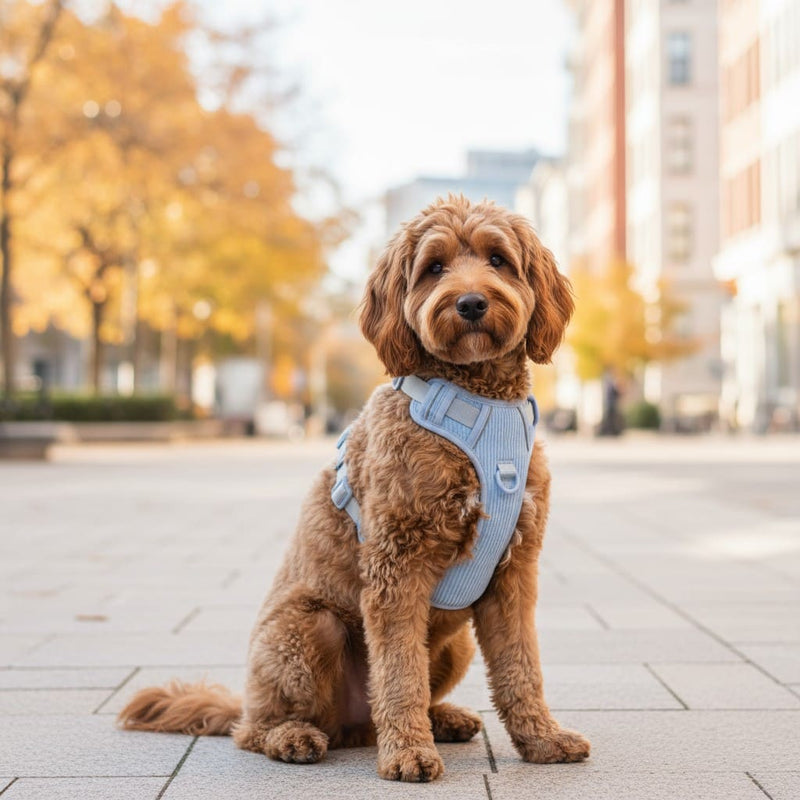
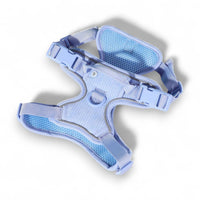
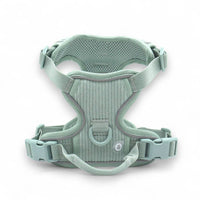
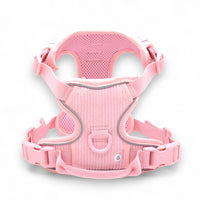
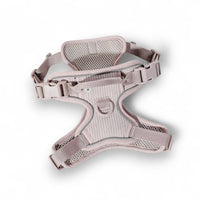
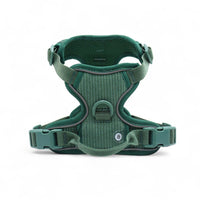
The STYRA dog harness combines function with Scandinavian design. Its corduroy look and breathable mesh fabric make it a real eye-catcher on every walk.
Highlights:
- Elegant design with a corduroy look
- Breathable mesh material
- Lightweight and comfortable to wear
- Y-shaped chest strap for optimal ergonomics
- Available in 5 elegant pastel colors
Ideal for: Stylish everyday life, fashion-conscious dog owners, and anyone who appreciates Scandinavian design. Available in sizes S to L.
Discover STYRA →All colors at a glance
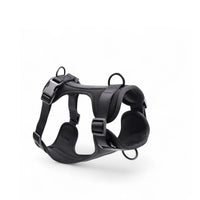
The SELKA dog harness is available in 10 colors – click on your favorite color:
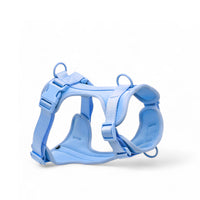
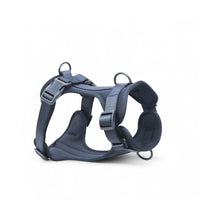
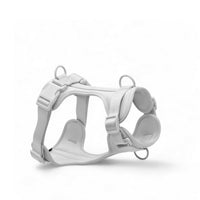
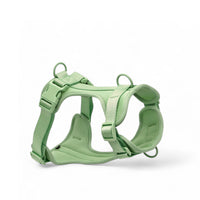
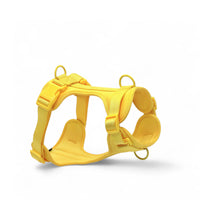
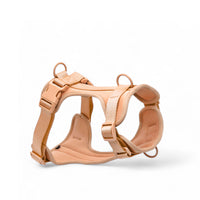
The STYRA dog harness is available in 5 elegant colors:
Frequently asked questions about dog harnesses
From what age can a puppy wear a harness?
Once your puppy moves in with you and starts going on walks – around 8-10 weeks old – it can wear a suitable harness. A harness is actually preferable to a collar for puppies, as their cervical spine is still very sensitive.
How tight should a dog harness fit?
The two-finger rule is the best test: Two flat fingers should fit between the harness and the dog's body. This means the harness is tight enough to stay in place, but loose enough to allow freedom of movement and breathing.
Can my dog sleep with a harness on?
No, the harness should be removed after the walk. Wearing it continuously can cause chafing and prevents the skin from breathing. Besides, your dog can relax better when it's free.
How often should I wash the dishes?
Depending on usage, every 2-4 weeks. Most nylon harnesses can be machine washed at 30°C – but always check the manufacturer's care instructions beforehand. Close any metal parts before washing to prevent damage.
Y-harness or Norwegian harness – which is better?
For most dogs, the Y-harness is the better choice, as it leaves the shoulder blades completely free. The Norwegian harness is easier to put on, but can restrict the natural movement of active dogs. For relaxed walks without much pulling, the Norwegian harness is a good alternative.
Conclusion: The best dog harness of 2026

A high-quality dog harness is an investment in your dog's health and well-being. Y-harnesses proved to be the most ergonomically sound solution in our tests – they offer maximum freedom of movement, optimal pressure distribution, and are suitable for all activities.
When buying a harness, pay attention to the correct size (measure your dog's chest circumference!), high-quality materials, and good adjustability. Whether sporty and robust like the SELKA or stylish and lightweight like the STYRA – with the right harness, walks will be a relaxing pleasure for you and your dog.
Do you have any further questions about choosing the right size?
Check our size chart or write to us – we're happy to help!
Go to size chart →