
How much exercise does a dog need? The ultimate guide by breed and age

"How often do I need to take my dog out?" – one of the most frequently asked questions by dog owners. And one that can't be answered with a blanket statement. Exercise needs depend on many factors: breed, age, health, and your dog's temperament all play a role. A Border Collie has different needs than a Pug – and a puppy different needs than a senior dog.
The most important points in brief
- Minimum: Every dog should go out at least 2-3 times a day.
- Breed matters: Some dogs need 1 hour a day, others 3-4 hours.
- Quality over quantity: Varied walks are better than mindlessly racking up kilometers.
- Mental work counts: Mental stimulation is just as important as physical exercise.
- Consider age: Puppies and senior dogs have special needs.
Outdoor access by breed: An overview
The original purpose of a breed provides a good indication of its exercise needs. Hunting and herding dogs were bred for hours of work – lap and companion dogs were not.
Limited exercise (approx. 1 hour daily)
These dogs are happy with shorter, but more frequent walks:
- French Bulldog – short nose makes breathing difficult during exertion
- Pug – a friendly companion dog, but be careful in hot weather.
- English Bulldog – heavy build, tires easily
- Maltese – small companion dog, loves walks, but not marathons.
- Chihuahua – despite its energy: small legs, shorter distances
- Saint Bernard – despite its size: heavy and cuddly
- Great Dane – large, but not an endurance athlete
Important: "Little exercise" does not mean "no exercise." These dogs also need daily exercise – just at a moderate pace.
Medium exercise time (approx. 1.5-2 hours daily)
The majority of dog breeds fall into this category:
- Poodles – intelligent and love exercise
- Beagle – active as a hunting dog, but not an extreme sports dog.
- Cocker Spaniel – loves walks and fetching
- Shih Tzu – more active than he looks
- Boxer – playful, but don't overdo it because of their short nose.
- Dachshund – small, but quite persistent as a hunting dog
- Mixed-breed dogs – mostly in this category
Plenty of exercise (approx. 2-3 hours daily)
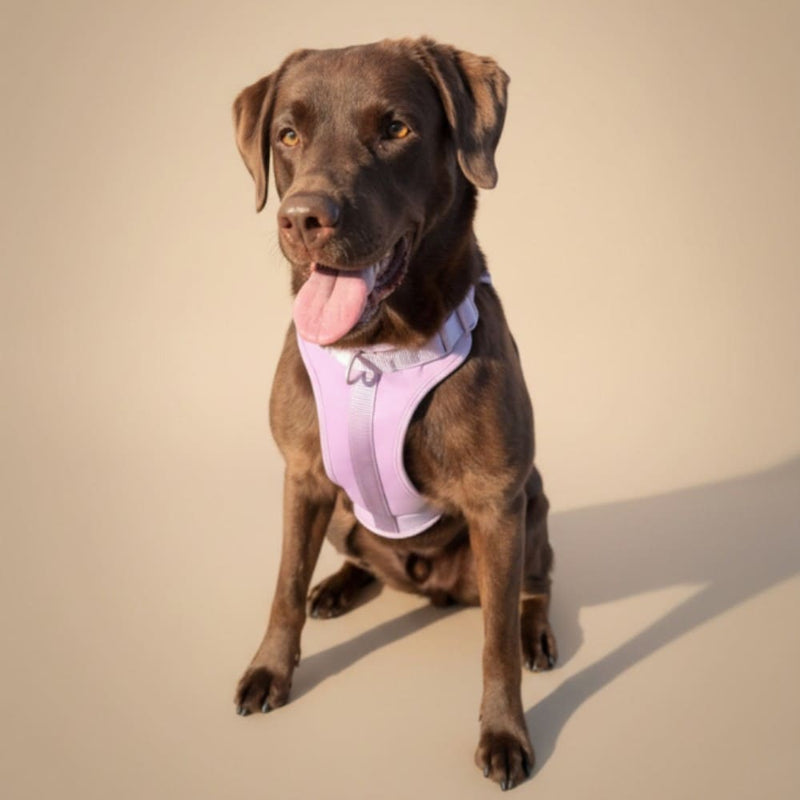
These breeds were bred for work and therefore have a lot of energy:
- Labrador Retriever – working dog with great stamina
- Golden Retrievers – active and love exercise
- German Shepherd – a working dog through and through.
- Australian Shepherd – a herding dog with an enormous urge to move
- Border Collie – considered the most active dog breed of all
- Jack Russell Terrier – small but extremely energetic
- Weimaraner – Hunting dog with great stamina
- Dalmatians – bred for long distances
Plenty of exercise (3+ hours daily)
For true sports enthusiasts among dog owners: Siberian Husky , Alaskan Malamute , Belgian Shepherd (Malinois) and Vizsla .
Honest self-assessment: Before you get a Husky or Border Collie, ask yourself: Can you really provide 3+ hours of exercise every day? In all kinds of weather? Even after a long workday?
Exercise according to age
Puppies (up to 12 months)
Puppies may seem to have endless energy, but their bodies are still growing. Too much exercise can damage their joints and bones. A good rule of thumb is 5 minutes of walking per month of age, twice a day. So a 4-month-old puppy should go for about two 20-minute walks.
- Several short walks instead of one long one
- No jogging or cycling with puppies
- Avoid stairs if possible (especially with large breeds)
- Playing with other puppies is okay – the puppy sets the pace itself.
Adult dogs (1-7 years)
During this stage of life, most dogs have their highest exercise needs. The exact amount depends on the breed (see above). A general rule of thumb: at least three walks a day, including at least one longer walk (30-60+ minutes).
Seniors (from 7-8 years old)
Older dogs become calmer and often develop joint problems. Nevertheless, they still need exercise – just adapted: several short walks are better, adjusting the pace to the dog's needs, and soft surfaces are preferred. If your dog is in pain or lame, consult your veterinarian.
Quality over quantity: What really fills the workload
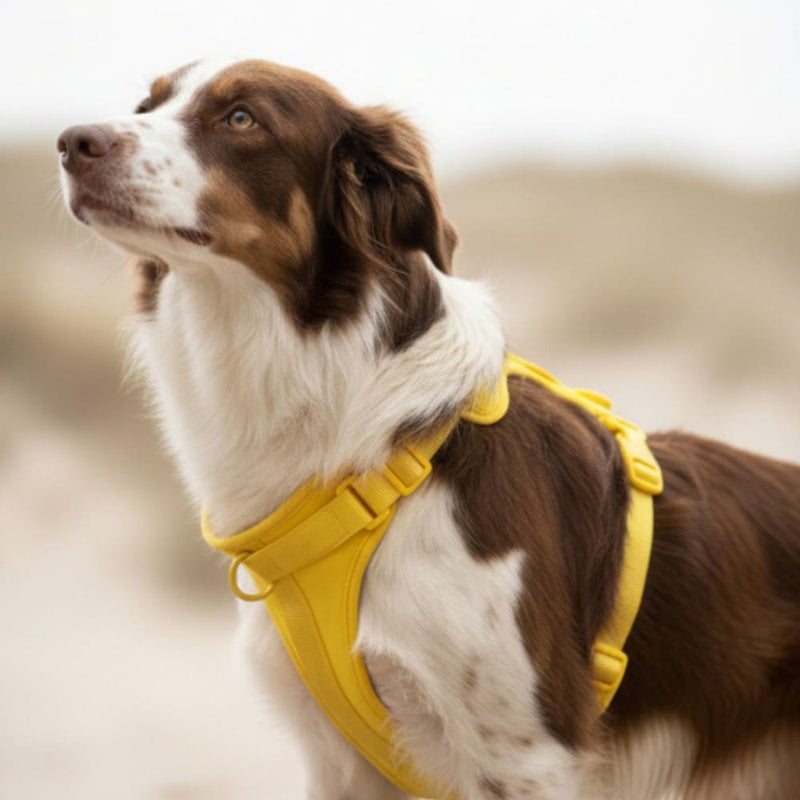
A common mistake: Dog owners think that if they just let their dog run enough, it will be satisfied. But a dog that mindlessly runs 10 km alongside a bicycle every day is physically fit – but mentally understimulated.
True exercise = body + mind. A varied 45-minute walk with sniffing, practicing commands and short play sessions can tire a dog out more than a 2-hour run.
Ideas for mental stimulation
- Letting your nose sniff: Making your nose work is tiring!
- Search games: Hide treats and let the players find them.
- Practicing commands: Short training sessions during walks
- Exploring new paths: Variety challenges the senses
- Retrieving: Combines movement with mental work
Signs of insufficient exercise
Your dog will show you when he's under-stimulated: destroying objects, barking excessively, being restless, jumping up on people, pulling excessively on the leash, or gaining weight. More exercise and, above all, more mental and physical stimulation can help.
Signs of too much exercise
Yes, this also happens – especially with puppies and senior dogs: the dog lies down during the walk, limps afterwards, is extremely exhausted or shows stiffness the next day.
Frequently Asked Questions
How often does a dog need to go out each day?
At least 3 times a day: morning, midday/afternoon, and evening. Puppies and senior dogs often need more frequent, but shorter, walks.
Is a large garden sufficient as an exercise area?
No. A garden is convenient for relieving themselves, but it doesn't replace walks. Dogs need new impressions, smells, and social contact outside their territory.
How long should a walk last?
At least one walk per day should last 30-60 minutes. Longer is fine for active breeds.
My dog doesn't want to walk anymore. What should I do?
Sudden reluctance to move can be a sign of pain or illness – time to see the vet! Shorter walks are often better suited to older dogs.
Conclusion
How much exercise your dog needs is individual. The breed provides a guideline, but ultimately you know your dog best. Observe him: Is he content and tired after the walk, or still restless? A varied walk with sniffing, playing, and short training sessions is more valuable than hours of covering long distances.
Well equipped for every walk
Whether a short stroll or a long hike: the right harness and leash make walks even more enjoyable. Our water bottles are practical for on the go.
Go to shop →